Engineered to withstand extreme subgrade challenges and severe tropical precipitation in the Central African Republic.
The Central African Republic (CAR) presents one of the most demanding geotechnical environments in sub-Saharan Africa. The combination of intense tropical rainfall patterns, highly weathered lateritic soils, and a landlocked logistics framework creates structural barriers for highway development, mining haulage routes, and municipal drainage. Traditional construction methods involving massive imports of concrete and structured aggregates are often economically prohibitive and structurally unsustainable under extreme humidity.
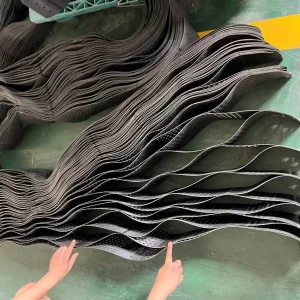
As a response to these structural challenges, the integration of Cellular Confinement Systems (Geocells) has emerged as the definitive standard for subgrade reinforcement, erosion control, and retaining wall construction. Geocells use the three-dimensional tensile properties of high-density polyethylene (HDPE) to confine local soils, substantially increasing their load-bearing capacity while facilitating natural water drainage. This whitepaper analyzes the mechanical profile of modern geosynthetics and addresses the industrial supply chain capabilities that link high-precision Chinese manufacturing with critical infrastructure development in CAR.
Civil engineering works in Bangui, Bimbo, Berbérati, and the northern mining corridors near Bria face complex physical dynamics. The primary subgrade material consists of lateritic clays, which possess high bearing capacities during the dry seasons but rapidly lose shear strength upon moisture saturation. The resulting structural failures are evident along key trade routes such as the RN1 (Bangui-Cameroon border corridor) and the RN3, where heavy-axle logistics trucks face severe rutting and washouts.
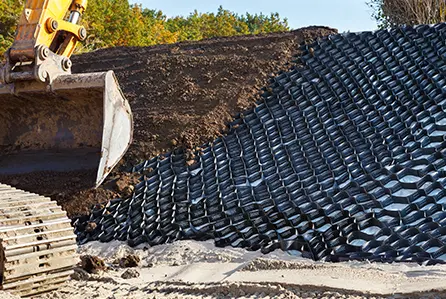
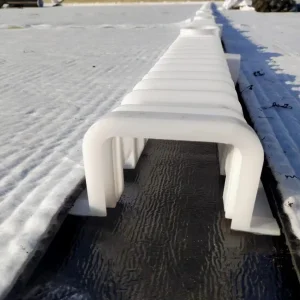
Using high-quality plastic gravel grids provides a continuous, semi-rigid foundation slab. By distributing concentrated vertical wheel loads horizontally over a wider footprint, geocells decrease the pressure applied to the sensitive underlying subgrade. The open-cell design permits lateral drainage of water while holding sand, aggregate, or local soil in place, eliminating the washing out of fine particles that triggers roadbed collapse.
Improves bearing capacity of laterite soils by up to 300% by confining fill materials and eliminating lateral shear failure.
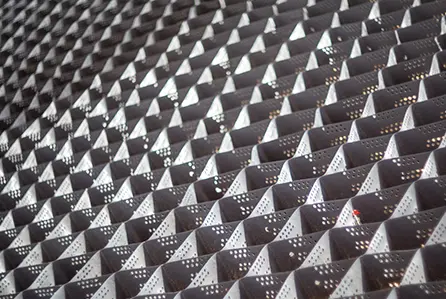
Enables efficient drainage through cell wall perforations, reducing hydrostatic pressure buildup during heavy monsoonal rainstorms.
Allows engineers to utilize local non-cohesive soils or gravels as structural infill, cutting the need for imported crushed rock.
Waterway stabilization remains a critical focus for urban planning and municipal safety in Bangui. The Ubangi River experiences significant seasonal flow deviations, leading to progressive riverbank erosion that threatens nearby dwellings and public works. Traditional riprap and concrete lining are vulnerable to continuous scouring at the toe of the slope.
By placing high-strength HDPE geocells on river banks, engineers create a flexible mattress structure that accommodates minor settlement without cracking. When filled with local soil and seeded with native vegetation, the root systems intertwine with the cell matrix. This bio-engineered approach protects slopes against high-velocity flows, controls soil runoff, and restores the local riparian ecosystem.
Your Trusted Global Partner for Premium Geosynthetics and High-Performance Containment Materials.
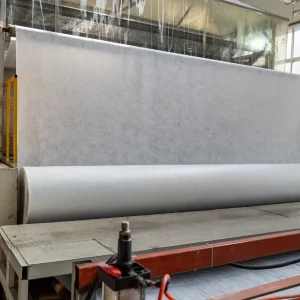
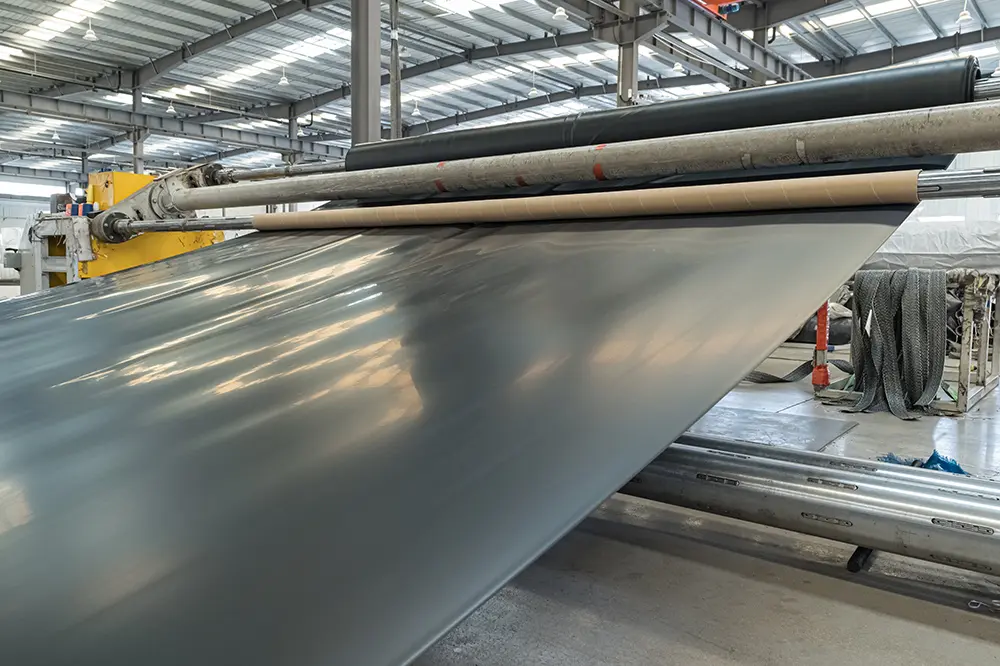
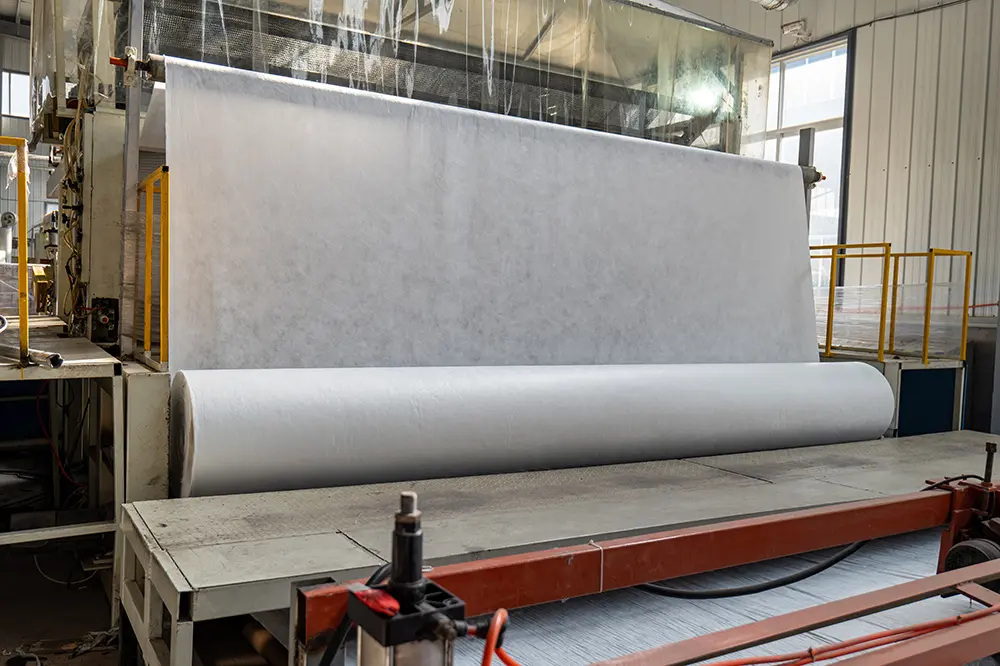
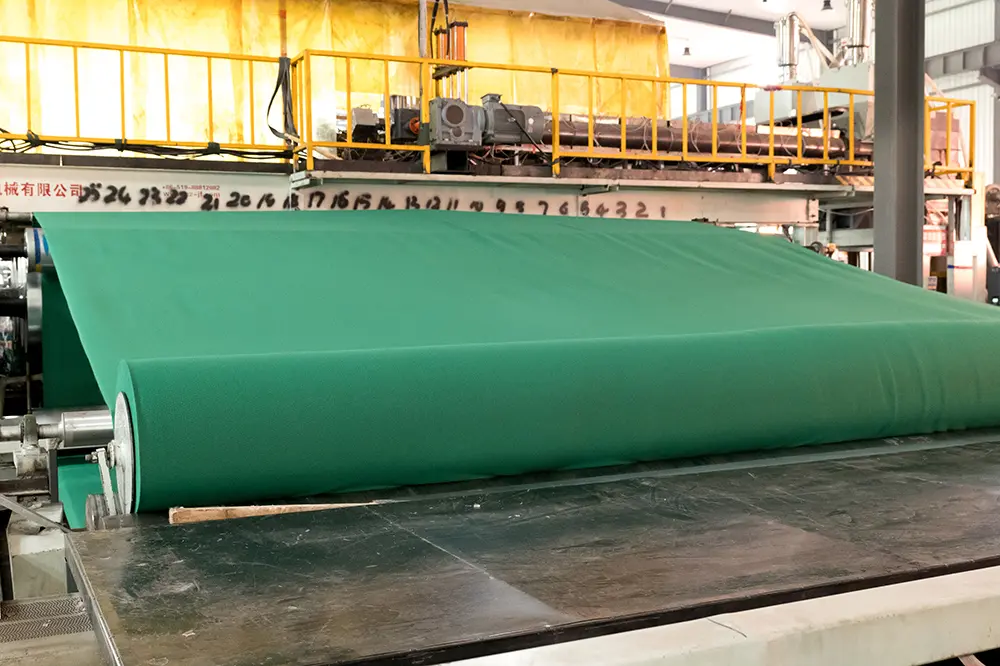
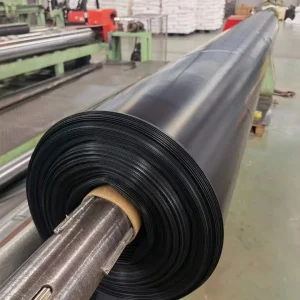
Taian Changhong Engineering Materials Co., Ltd. is a recognized leader in the engineering, production, and distribution of comprehensive geosynthetic products. Our state-of-the-art production facility manufactures premium smooth geomembranes, structured rough geomembranes, double-color liners, and high-tensile geotextiles (including polyester short/long fiber non-woven and polypropylene hot-rolled materials).
By utilizing high-quality raw materials and strict formulation protocols, we configure tailored geosynthetic configurations in HDPE, LDPE, EVA, and ECB. Our engineering solutions deliver reliable containment, anti-seepage protection, and structural stabilization across critical infrastructure projects.
Our operation is supported by 3 chief chemical process engineers, 5 mechanical engineers, and 9 specialized equipment operators, keeping our products at the forefront of geotechnical science.
Operating under ISO9001, ISO14001, and OHSAS18001 certifications, we subject every production run to strict physical and chemical testing to ensure performance in field environments.
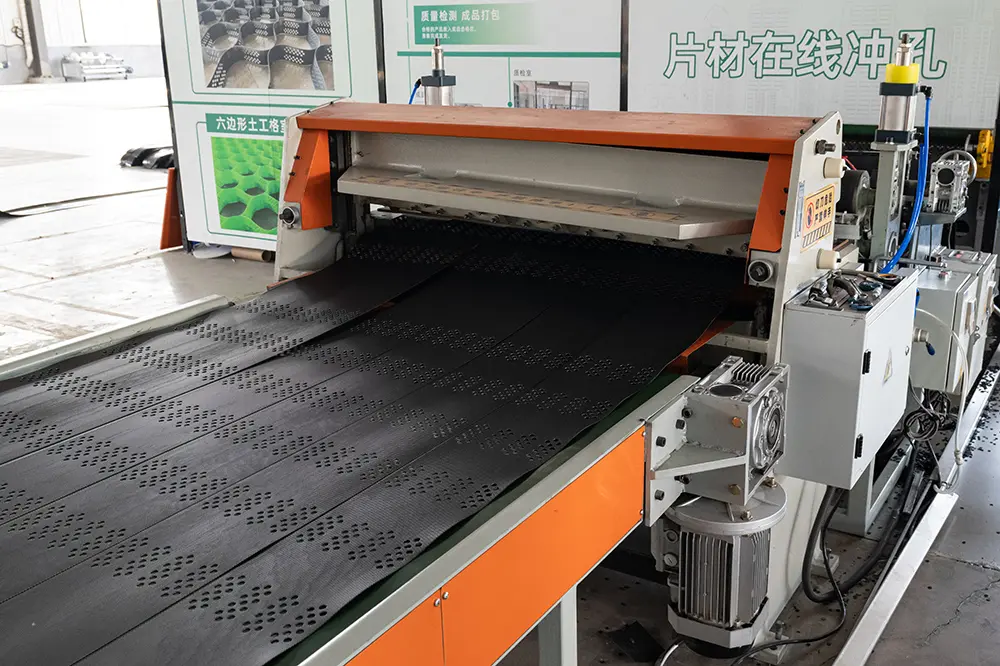
From high-durability UV stabilizers for equatorial solar loads to custom cell wall perforations, we customize mechanical variables to meet specific project needs.
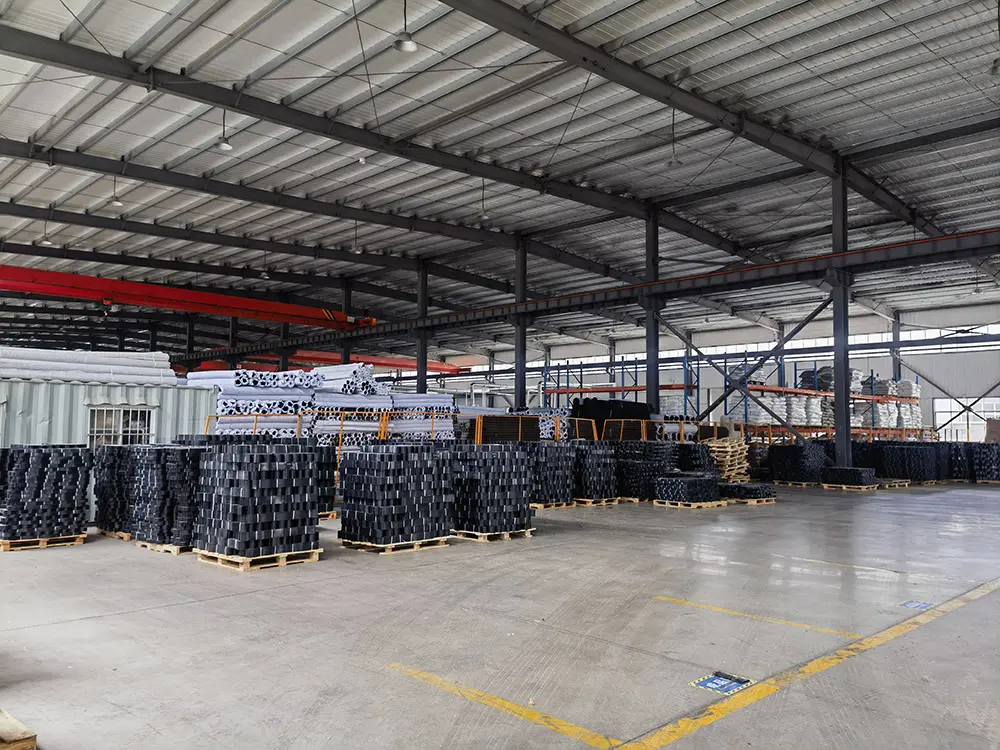
The company has passed the ISO9001, ISO14001 and OHSAS18001 certifications, and has professional technical personnel and advanced equipment and instruments. There are currently over 60 employees, including 3 chief chemical process engineers, 5 mechanical engineers and 9 professional equipment operation engineers.
The above-mentioned professionals have many years of practical working experience. Our strong technical strength ensures the stability and forward-looking nature of our products. The company has always kept an eye on the world's advanced level. With its strong economic and technological strength, it maintains leading geosynthetic material production lines and testing equipment. Relying on a complete product production system and quality inspection system, it creates high-quality and high-standard products.
How our geosynthetic materials are integrated into structural, hydraulic, and environmental engineering sectors.
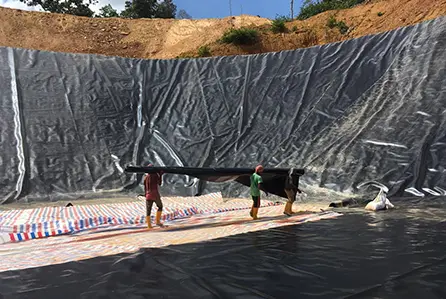
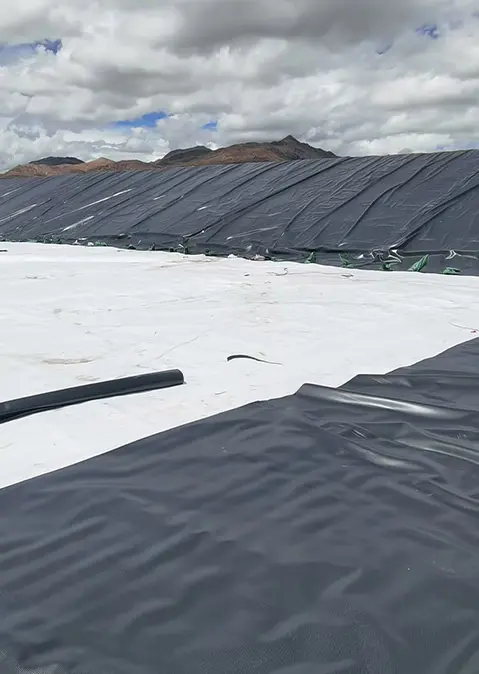
Anti-seepage for landfill sites, garbage disposal plants, biogas digesters, sewage ponds, wastewater ponds, power plant regulating ponds, etc.
Slope protection and anti-seepage for breeding ponds, fish ponds, shrimp ponds, lotus root ponds, urban gardens, community greening, artificial lakes, swimming pools, golf courses, etc.
Waterproofing, anti-seepage and moisture-proofing for underground pipe galleries such as subways and tunnels, anti-seepage reinforcement for high-speed slopes, and anti-seepage for roof surfaces.
Slope protection and seepage prevention for dams, rivers, canals, reservoirs, water storage tanks and wharf projects.
Washing and selection tanks, heap leaching tanks, ash storage yards, dissolution tanks, sedimentation tanks, storage yards, and anti-seepage lining for tailings. Anti-seepage for chemical plants, oil refineries, and oil storage tanks.
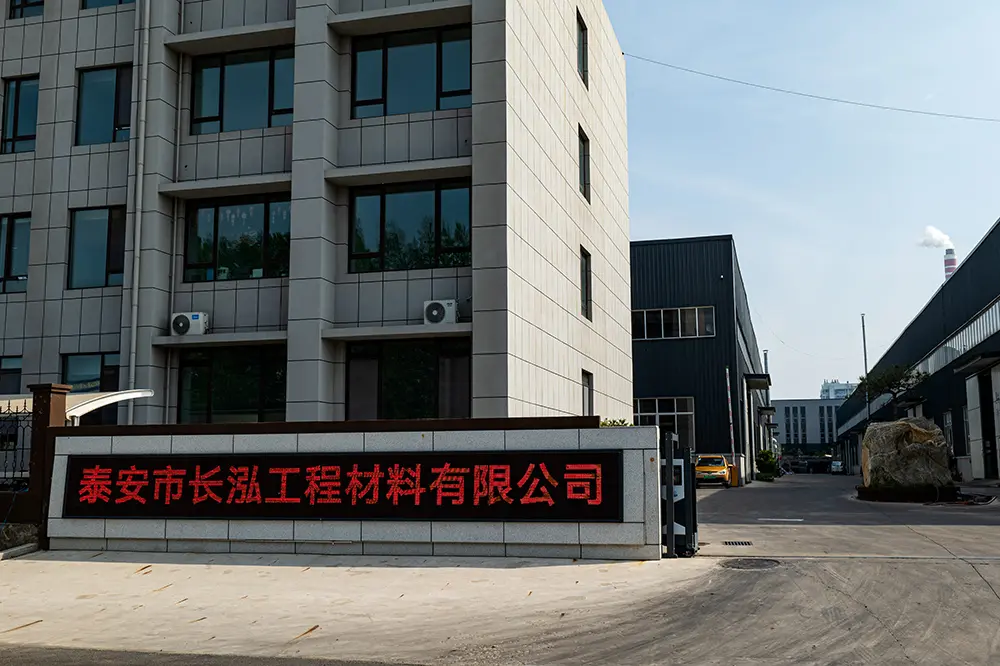
A visual insight into our state-of-the-art manufacturing plants, packaging details, and inventory readiness.
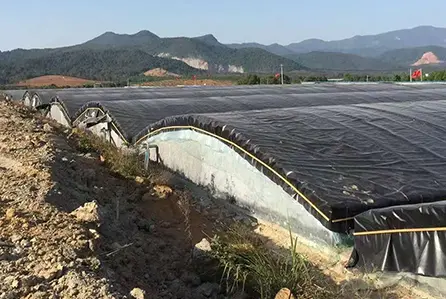
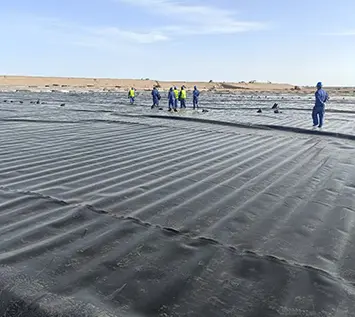
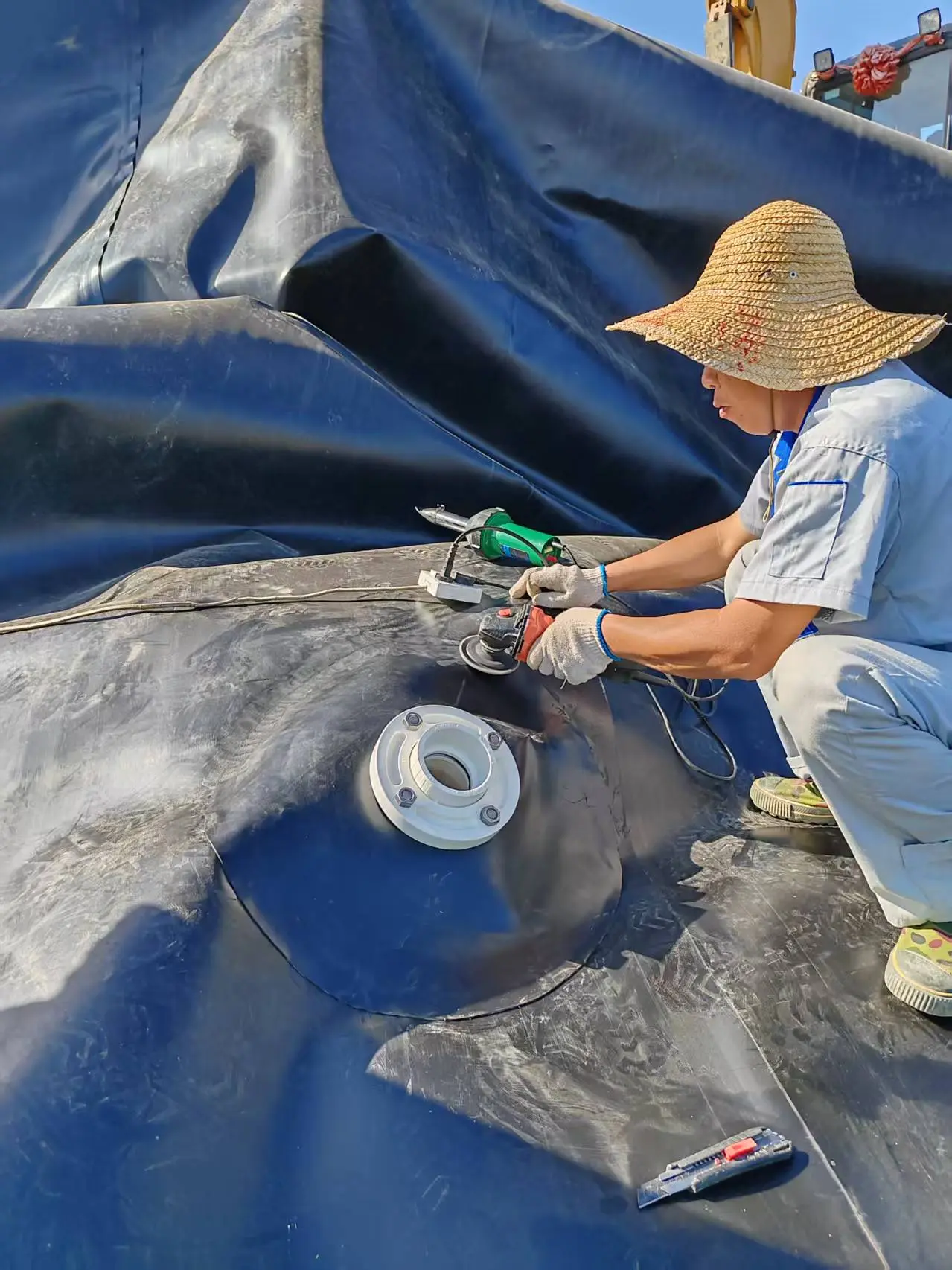
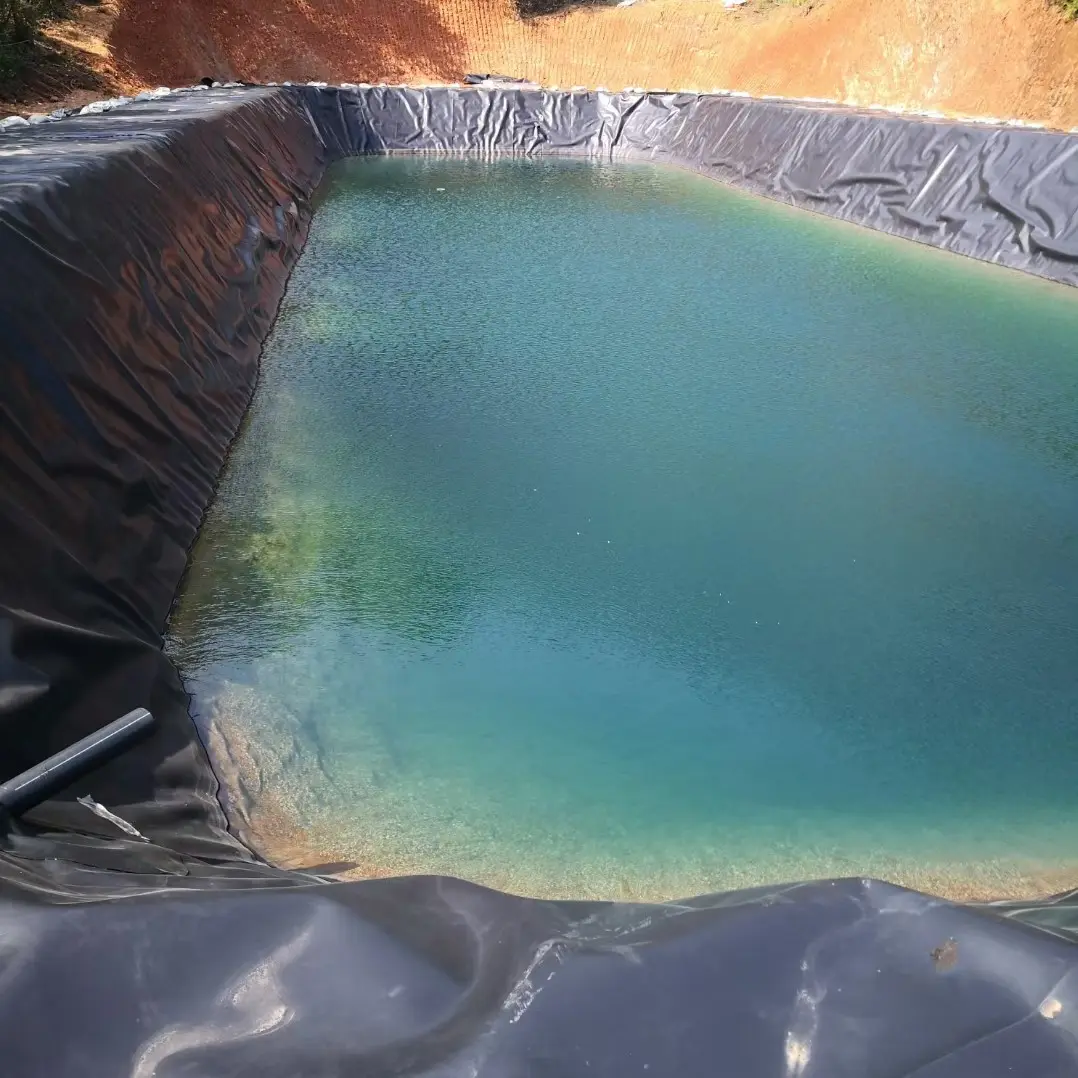
Engineering solutions implemented by Changhong in regional highway stabilization, slope protection, and containment lining.
Essential field engineering references for deploying geocells and geomembrane liners under hot, humid tropical conditions.
As the Central African Republic is landlocked, importing high-volume industrial geosynthetics requires careful logistics management. Taian Changhong Engineering Materials Co., Ltd. has established supply chain routes to secure deliveries to municipal and private projects across the country.
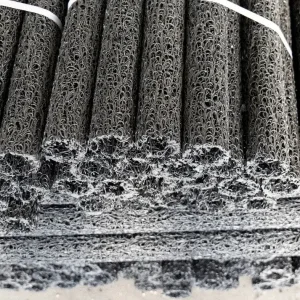
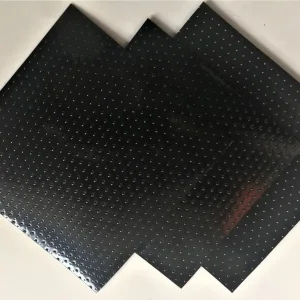
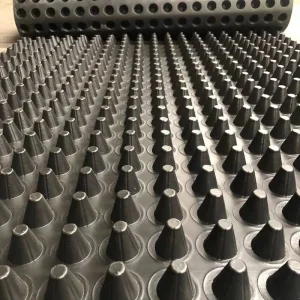
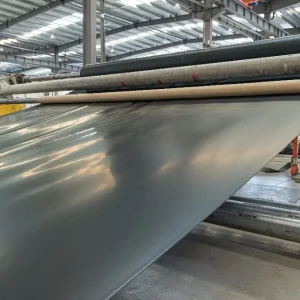
Explore our full range of geomembranes, geotextiles, and specialized drainage systems designed for civil infrastructure projects.
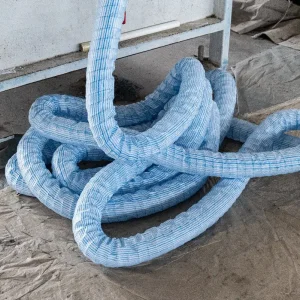
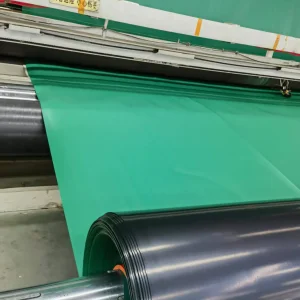
Get in touch with our engineering team for technical specifications, product pricing, and customized options. We provide complete logistic support to the Central African Republic.
Send Inquiry Now Changhong