Ultimate Tips for Choosing Clay Drainage Tiles for Your Needs?

Time:2026-06-01 Author:Charlotte
0%

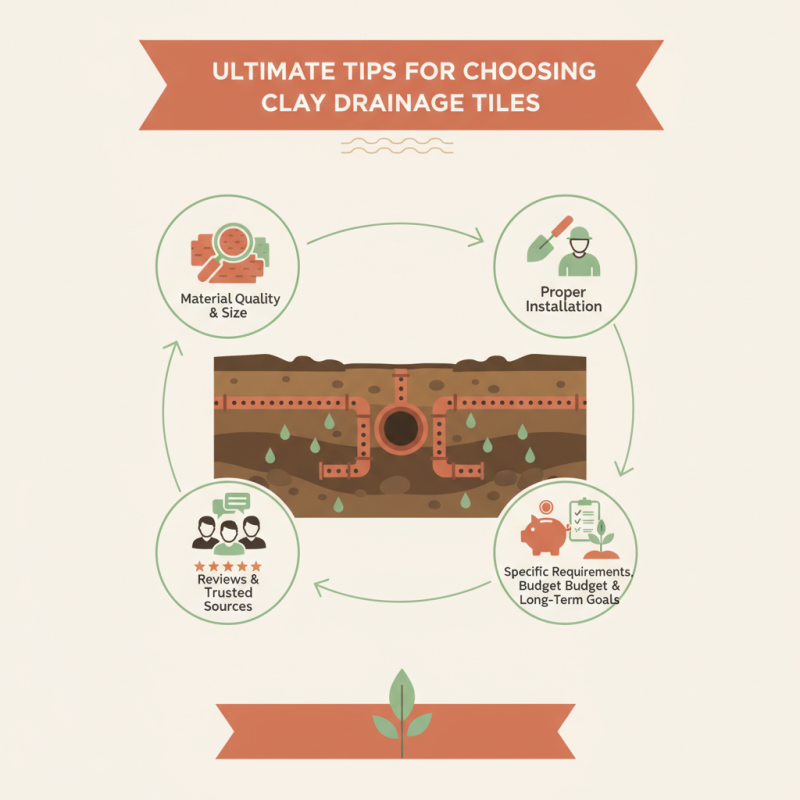
When selecting Clay Drainage Tiles, it's essential to consider various factors that influence your decision. These tiles play a crucial role in managing water drainage, which can significantly impact your land's health and productivity. Not all clay tiles are created equal; their effectiveness can vary based on several elements, including material quality and size. Understanding these aspects allows you to choose tiles that best fit your drainage needs.

Expertise in this area is vital. Many people overlook the importance of proper installation. Without it, even the best Clay Drainage Tiles may fail to function optimally. Therefore, finding a knowledgeable supplier or contractor can make a significant difference. Reviews and ratings help gauge reliability. Still, it's critical to seek firsthand experiences from trusted sources to ensure you are making an informed choice.

Choosing the right Clay Drainage Tiles can seem daunting, yet the right approach simplifies the process. Consider your specific requirements, budget, and long-term goals. Reflecting on these points often reveals overlooked details that matter. Through thoughtful consideration, you can enhance your land's drainage and, ultimately, its productivity.
Ultimate Tips for Choosing Clay Drainage Tiles for Your Needs?

Understanding the Basics of Clay Drainage Tiles

Choosing the right clay drainage tiles can significantly impact your land management projects. Clay drainage tiles play a crucial role in managing soil moisture. Understanding how they work is essential for making informed choices.

Clay tiles are versatile but come in different sizes and shapes. Consider the layout of your land when selecting tiles. A flat area requires different solutions compared to sloped land. It’s important to measure the expected water flow. Too many tiles may lead to excessive drainage, which can dry out soil.

Installation can be tricky. Improperly placed tiles can create unintended water pools. Sometimes, tiles break or clog over time. Regular maintenance is essential but can be overlooked. Evaluate your needs frequently to avoid costly mistakes. Make sure to consult with experts to understand your unique terrain better. A little knowledge goes a long way, but experience is just as important.

Identifying Your Specific Drainage Needs

When choosing clay drainage tiles, understanding your specific drainage needs is crucial. Different properties require different solutions. Factors like soil type, gradient, and the area’s climate all influence these needs. Clay tiles are often used for agricultural purposes. They help manage water, prevent flooding, and support plant health. Identifying your unique situation can guide your decision.

Consider evaluating your property's soil drainage characteristics. Is the soil heavy clay or sandy? Heavy soils retain water, while sandy soils drain quickly. Each has distinct needs for tile size and layout. Additionally, understanding local weather patterns is important. Areas with heavy rainfall may require closer tile spacing to effectively manage excess water. Reflect on your property’s layout, and think about potential drainage issues.

It’s essential to assess what worked in the past and what didn’t. Some homeowners might have used the wrong tile dimensions, leading to inadequate drainage. Learning from these experiences can be a game changer. Don’t rush the selection process. Take your time to analyze all factors involved. Finding the right clay tiles tailored to your specific needs leads to lasting success.

Ultimate Tips for Choosing Clay Drainage Tiles for Your Needs

Aspect Considerations Benefits
Soil Type Identify the type of soil (clay, sandy, loamy) Improved drainage specific to soil conditions
Drainage Capacity Calculate the required drainage capacity for your area Ensure efficient water management
Tile Size Choose appropriate dimensions for your project Facilitates better flow and effectiveness
Installation Depth Determine the optimal depth based on soil moisture levels Maximizes drainage efficiency
Material Quality Select high-quality, durable materials Long-lasting and effective drainage solution
Cost Assess your budget versus options available Find cost-effective solutions

Factors to Consider When Choosing Clay Drainage Tiles

When selecting clay drainage tiles, there are several key factors to consider. The type of soil in your area plays a crucial role. For instance, clay soil retains water, requiring effective drainage solutions. A report by the American Society of Agronomy indicates that improper drainage can lead to up to a 30% reduction in crop yields. Therefore, understanding your soil type can inform your tile choice to prevent waterlogging.

Tile size is another important factor. Standard sizes range from 3 to 12 inches in diameter. Larger tiles can manage a higher volume of water. However, they can also be more challenging to install. A study by the Soil and Water Conservation Society shows that efficiency can decrease if tiles are too large for the soil's absorptive capacity. This highlights the need for careful planning in your selection.

Lastly, installation depth matters. Shallow installation might not be effective for deep-rooted crops. Conversely, deeper installations can complicate repairs. Research indicates that 50% of farmers neglect this aspect, leading to performance issues later. Each choice impacts performance, reinforcing the need for thorough consideration.

Ultimate Tips for Choosing Clay Drainage Tiles

This chart illustrates key factors to consider when selecting clay drainage tiles, evaluated based on their importance for optimal drainage solutions.

Comparing Different Types of Clay Drainage Tiles

Choosing the right clay drainage tiles can significantly impact your land's drainage efficiency. Various types are available, each with unique benefits. One popular option is the traditional round tile. This design promotes effective water flow but may require more maintenance. Another choice is the flat tile, which has a larger surface area. This can improve drainage speed but also increases the risk of clogging.

Considering clay drainage tiles' porosity is crucial. Some tiles have wider openings that allow better water flow, yet they may not filter sediments efficiently. Others have tighter openings that can handle silt but might slow drainage. Understanding your land's specific conditions will guide your choice.

Installation is also a pivotal aspect. The tiles should be placed at the proper depth for optimal performance. Incorrect positioning might result in inadequate drainage. Some users have reported poor results due to improper installation, emphasizing the need for expert advice. Engaging with professionals can help avoid costly mistakes and enhance the effectiveness of your drainage system.

Installation Tips for Optimal Drainage Performance

When installing clay drainage tiles, proper planning is crucial. Ensure the site is well-drained and free from debris. Evaluate the slope of the land. A slope of at least 1% is ideal. This prevents water pooling and enhances drainage efficiency.

Here are some tips to keep in mind. Choose the correct diameter for your tiles. Larger diameters handle more water, but smaller sizes may suffice for minor drainage. Pay attention to the soil type. Clay soils require different tile spacing than sandy soils. Adjust your installation based on these factors.

Avoid rushing the installation. Take your time to check alignment and depth. If tiles are not uniformly placed, it may lead to weak drainage areas. Reassess your work regularly for any gaps. The quality of your installation impacts overall performance. A thoughtful approach yields the best results for your drainage needs.

FAQS

: What are clay drainage tiles used for?

: They manage soil moisture, support agricultural growth, and prevent flooding.

How do I choose the right size of clay tiles?

Tile sizes range from 3 to 12 inches. Larger tiles handle more water but are harder to install.

What happens if too many tiles are installed?

Excessive tiles can lead to over-drainage, drying out the soil and harming crops.

How important is soil type for drainage tile selection?

Very important. Heavy clay soil holds water, needing special tile configurations for effective drainage.

Why should I consider installation depth?

Shallow installations may not support deep-rooted crops, while deeper ones complicate future repairs.

What are common mistakes in choosing drainage tiles?

Using incorrect tile dimensions can lead to inadequate drainage and costly issues later.

How can maintenance impact my drainage system?

It’s crucial. Neglecting maintenance can lead to clogs and broken tiles, greatly reducing effectiveness.

Should I consult experts?

Yes, experts can provide insights tailored to your terrain, enhancing your drainage solution choices.

How does local climate affect drainage needs?

Areas with heavy rainfall may require closer tile spacing to manage water efficiently.

What should I do if past efforts failed?

Reflect on what went wrong and adjust your approach for better results in future drainage projects.

Conclusion

Choosing the right Clay Drainage Tiles is essential for effective water management in agricultural and landscaping projects. Understanding the basics of these tiles is the first step, as they help manage excess water, preventing soil erosion and promoting healthier plant growth. Identifying your specific drainage needs allows for a more tailored approach, ensuring that the selected tiles meet the unique requirements of your landscape.

When selecting Clay Drainage Tiles, it’s important to consider various factors, such as the size of the area needing drainage, soil type, and the overall design of the drainage system. Comparing different types of tiles will also provide insights into their performance and suitability for your project. Finally, following proper installation tips will enhance the drainage performance, ensuring that your investment yields long-term benefits in managing water efficiently.


Charlotte

Charlotte

Charlotte is a seasoned marketing professional with a deep understanding of the company's portfolio and a passion for elevating its presence in the market. With a keen eye for detail and a commitment to excellence, she ensures that our professional blog is regularly updated with insightful articles......